
Why Pain Can Show Up in One Place
Quick takeaway
Back pain often returns when the body keeps repeating the same movement, posture, load or protection pattern.
The pain may be in your back, but the pattern may also involve your hips, pelvis, ribs, feet, breathing, stress, old injuries, scars, work habits or recovery.
Temporary relief is helpful, but if the same pain keeps returning, the body may need a deeper look.
At LifeSTATE Clinic, we look beyond the sore area to understand what your back may be responding to.
When the Real Pattern May Start Somewhere Else
Thoughts from the treatment room
You feel the pain in one place.
Your neck.
Your shoulder.
Your lower back.
Your hip.
Your knee.
One side of your body.
So naturally, that is where you focus.
You rub it.
You stretch it.
You heat it.
You ask someone to work on it.
You try to “fix” that spot.
And sometimes, it helps.
For a while.
But then the same pain returns — or another area starts complaining too.
This is where many people become confused.
“If my shoulder hurts, isn’t the shoulder the problem?”
“If my back hurts, shouldn’t we only work on my back?”
“If the pain is here, why would anything else matter?”
The answer is simple, but important:
The place where you feel pain matters.
But it may not be the whole story.
Does this sound familiar?
You may recognise yourself in some of these situations:
Your neck hurts, but your shoulders and upper back are always tight too.
Your lower back keeps hurting, and your hips feel stiff.
One shoulder is painful, but your ribs, neck or jaw also feel restricted.
Your knee hurts, but your ankle, hip or walking pattern feels different.
You have pain on one side that keeps returning.
Treatment on the painful spot helps for a while, but the pain comes back.
You have an old injury, surgery or scar somewhere else in the body.
You feel like your body is connected, but you do not know how.
You keep chasing symptoms without understanding the pattern.
If several of these feel familiar, it does not mean something is seriously wrong.
It may mean your body is asking us to look at the bigger picture.
Why the painful spot is not always the starting point
The body does not work as separate parts.
Your neck does not work alone.
Your back does not work alone.
Your hips do not work alone.
Your feet do not work alone.
Every movement is a conversation between many areas of the body.
When one area becomes restricted, overloaded, guarded or underused, another area may start helping.
At first, this compensation can be useful.
The body is intelligent. It tries to keep you moving.
But if the same compensation continues for too long, the helper area may become tired, tight or painful.
That is why the pain may show up in one place, even though the bigger pattern started somewhere else.
A simple example: neck pain and the upper back
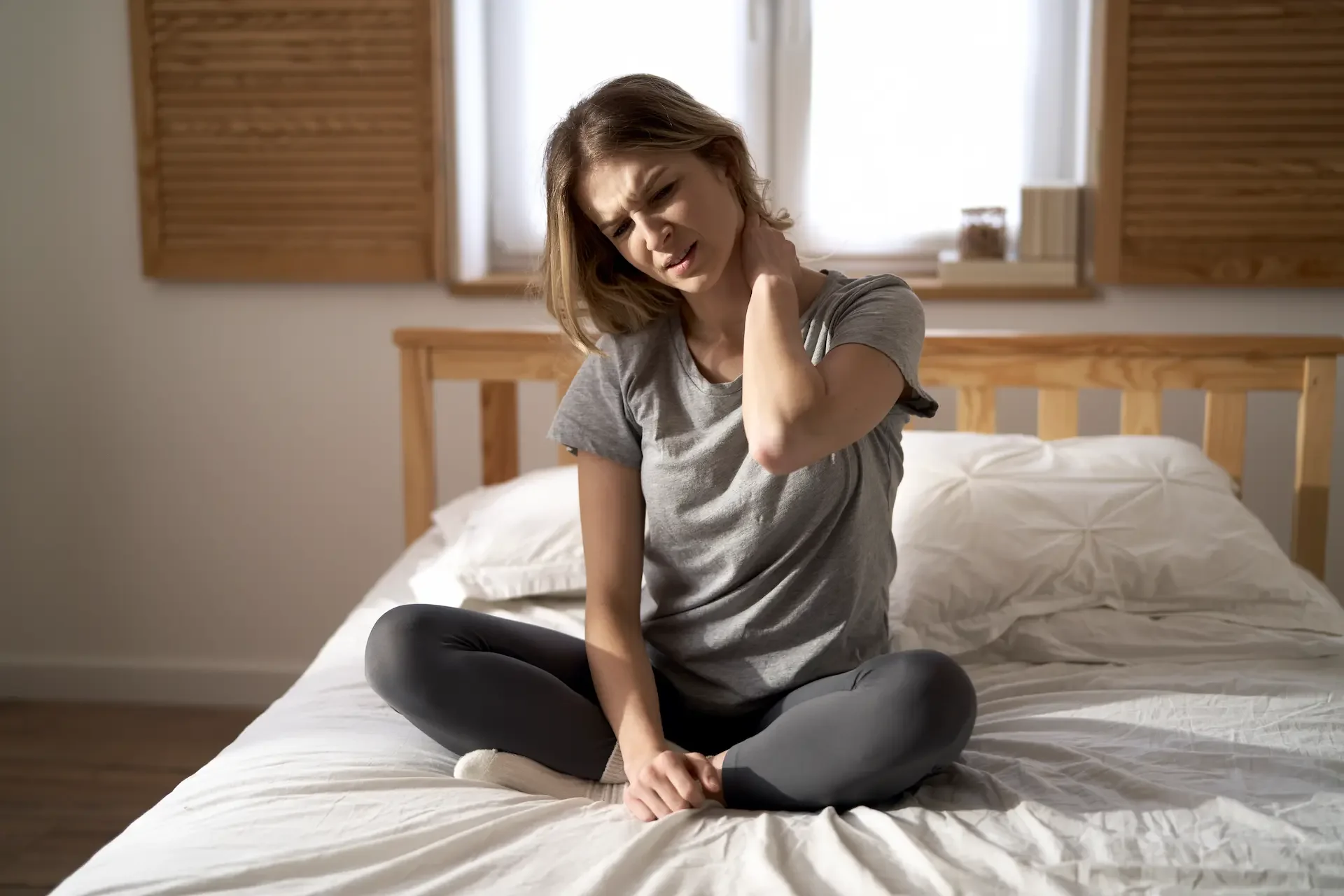
Many people come in with neck pain.
They feel it in one very clear place: the side of the neck, the base of the skull, or across the top of the shoulders.
But when we look more closely, the pattern may also involve the upper back, ribs, shoulders, jaw, breathing, stress or long hours at a desk.
If the upper back is stiff, the neck may have to move more than it should.
If the shoulders are always slightly lifted, the neck may never fully rest.
If breathing is shallow, the muscles around the neck and chest may work harder.
So yes, the neck hurts.
But the neck may not be the only area we need to understand.
Another example: lower back pain and the hips
Lower back pain is another common example.
Someone may feel pain across the lower back and assume the back is weak, damaged or “out”.
But sometimes the lower back is working too hard because the hips, pelvis, abdomen, ribs, feet or old scars are not moving well with it.
If the hips are stiff, the lower back may compensate.
If one foot loads differently, the pelvis may adapt.
If the front of the body is tight after surgery or a scar, the back may respond.
If stress keeps the whole body braced, the lower back may stay guarded.
The pain is real.
But the reason behind it may be bigger than the sore spot.
Why chasing only the symptom can feel frustrating
When pain keeps returning, it is easy to feel like your body is failing you.
You may think:
“I already treated this.”
“I already stretched this.”
“I already rested.”
“Why is it back again?”
But if only the painful spot was addressed, and the deeper pattern stayed the same, the body may return to the same problem.
This is not because you did something wrong.
It may simply mean the body needs a different question.
Not only:
“How do we make this hurt less?”
But also:
“Why is this area under so much pressure?”
“What is it compensating for?”
“What is the body protecting?”
“What pattern keeps bringing this back?”
That is where real understanding begins.
Old injuries and scars can be part of the story
Sometimes the body still adapts around something that happened years ago.
A sprained ankle.
A knee injury.
A fall.
A surgery.
A C-section scar.
An abdominal scar.
A shoulder injury.
A sports injury that “healed” but never felt quite the same.
The original pain may be gone.
But the body may have learned a new way to move around it.
You may load one side differently.
You may twist slightly.
You may protect without noticing.
You may avoid a movement so quietly that it becomes normal.
This does not mean every old injury or scar causes problems.
But when pain keeps returning, the body’s history is worth listening to.
Stress can also change where pain shows up
Stress does not only affect your mind.
It can change the way your body holds itself.
When the nervous system is under pressure, the body may become more guarded.
The shoulders may lift.
The jaw may clench.
The breath may become shallow.
The ribs may move less.
The back may tighten.
The hips may feel stuck.
For some people, stress always shows up in the same place.
The neck.
The lower back.
The jaw.
The shoulders.
This does not mean the pain is “just stress”.
It means stress may be one layer in the body pattern.
The LifeSTATE perspective
At LifeSTATE Clinic in Stoke, Nelson, I do not ignore the painful area.
But I do not stop there.
I want to understand what your body is doing as a whole.
That may include:
how the painful area moves;
what nearby areas may be restricted;
whether one side is compensating;
how your breathing and posture support movement;
whether old injuries, surgeries or scars may be involved;
how stress affects your body;
how your daily work, sleep and recovery influence the pattern;
how your connective tissue feels and responds.
Before your first appointment, you receive a questionnaire. This helps me understand your symptoms, history, daily habits, stress levels, previous injuries, surgeries, scars, and what you would like help with.
During the appointment, I assess how your body moves and how the painful or restricted area behaves.
The first session usually includes both assessment and hands-on treatment, depending on what your body needs on the day.
English is my second language, and I am still developing it. During the session, I keep communication simple, practical and focused on what we are doing.
After your appointment, I send you a detailed follow-up email with my observations, what I noticed in your body, and suggestions for the next steps. This may include practical advice, simple home guidance, or recommendations for further treatment.
This written follow-up gives you time to read, understand and come back to the information after the session.
What can you notice at home?
You do not need to diagnose yourself.
Just begin noticing patterns.
1. What else feels connected?
If your neck hurts, notice your shoulders, jaw, ribs and upper back.
If your lower back hurts, notice your hips, feet, abdomen and breathing.
If your knee hurts, notice your ankle, hip and walking pattern.
2. When does the pain return?
After sitting?
After driving?
After stress?
After exercise?
After gardening?
After poor sleep?
The timing can tell us a lot.
3. Does treatment help, then fade?
If the painful area feels better after treatment but the pain keeps returning, ask what pattern may still be unchanged.
4. Look at old injuries or scars
A scar or injury does not have to hurt now to be relevant.
Sometimes the body adapts around old events quietly.
5. Do not force the painful area
If the body is protecting, aggressive stretching or pressure may not always help.
Gentle movement and curiosity are often better first steps.
When to seek help
Occasional aches and stiffness are common.
But if pain keeps returning, limits your movement, affects sleep, changes how you walk or work, or makes you avoid normal activities, it may be worth getting support.
Please seek appropriate medical advice if your pain is severe, worsening, sudden, unusual, follows a serious injury, or comes with numbness, weakness, tingling, fever, unexplained weight loss, chest pain, loss of coordination, changes in bladder or bowel control, or symptoms that feel unsafe or worrying.
LifeSTATE Clinic does not diagnose medical conditions.
But if your pain feels like a recurring body pattern, we can help you explore what your body may be responding to.
The body is not random
Pain can feel random when you do not understand the pattern.
But often, the body is not random.
It is adapting.
Protecting.
Compensating.
Remembering.
Trying to keep you going.
If you are in Nelson, Stoke, Richmond or the surrounding area and you feel pain in one place but suspect the story may be bigger, LifeSTATE Clinic can help you look beyond the painful spot.
Book an initial assessment, and let’s look at the pattern together.
Sometimes the first step is not finding a stronger treatment for the painful area.
Sometimes the first step is understanding why that area has been asking for help.
Frequently Asked Questions
Can pain in one area come from somewhere else?
Sometimes, yes. Pain may show up in one area because another part of the body is restricted, overloaded, guarded or compensating. This does not mean the painful area is not important, but it may not be the whole story.
Why does my neck hurt if my upper back is stiff?
If the upper back does not move well, the neck may have to work harder. This can contribute to neck tension, stiffness or recurring pain.
Can hip tightness affect lower back pain?
Hip tightness may contribute to lower back discomfort if the lower back has to compensate for limited hip or pelvic movement.
Can an old injury or scar affect pain years later?
Sometimes, yes. An old injury or scar may change how the body moves, loads or protects itself. It may be one part of a wider movement pattern.
Why does treatment on the painful spot only help for a while?
If the painful area is part of a bigger compensation pattern, treating only that spot may bring temporary relief, but the body may return to the same pattern.
Where can I get help with recurring pain patterns in Nelson?
If pain keeps returning in Nelson, Stoke or Richmond, you can book an initial assessment at LifeSTATE Clinic to better understand your body’s pattern.